
Trusted Garage Door Parts for San Francisco Homeowners
Garage door parts replacement in San Francisco typically costs $130–$400 depending on the component, and most jobs are completed same day when Paul Torres arrives personally. At Legacy Garage Door Service, we’ve spent eight years specializing exclusively in garage doors — not general handyman work — and our 935 verified reviews reflect what happens when the owner shows up as the lead technician on every call. Whether you’re in Noe Valley dealing with a snapped torsion spring or near the Mission District with frayed cables, we stock the parts to fix it without waiting for a warehouse order. Call (833) 700-7382 for a free estimate and we’ll get your door moving safely again.
What Our Garage Door Parts Service Includes
Torsion Spring Replacement
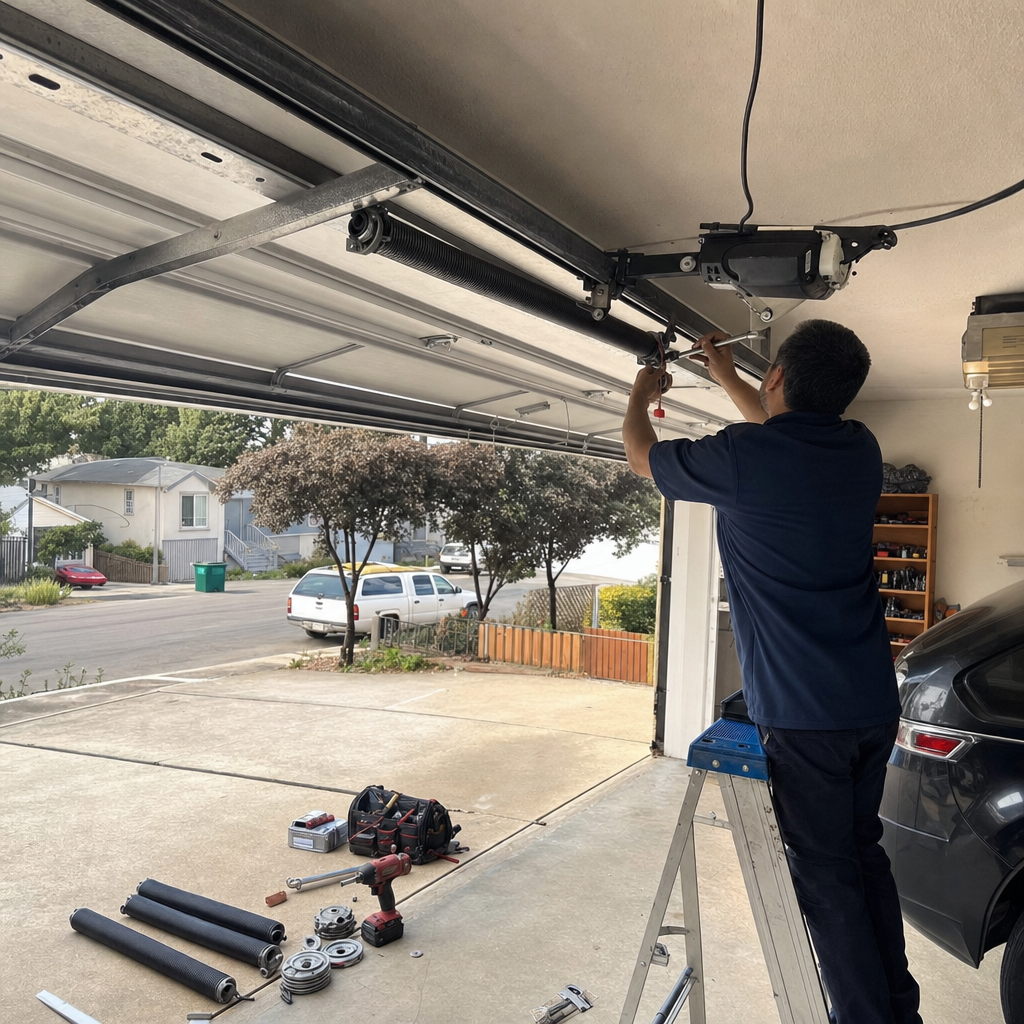
Torsion springs are the heavy-duty coils mounted above your door that do the actual lifting — they’re under extreme tension and typically last 7–12 years depending on cycle count. In San Francisco’s coastal climate, we regularly see premature corrosion from salt air in neighborhoods like the Outer Sunset and Pacifica-adjacent areas, which accelerates spring fatigue. When Paul Torres arrives, he’ll measure your existing spring’s wire gauge, inner diameter, and length to spec the exact replacement; we don’t guess, because an incorrectly sized torsion spring is dangerous and will fail early.
Extension Spring Replacement
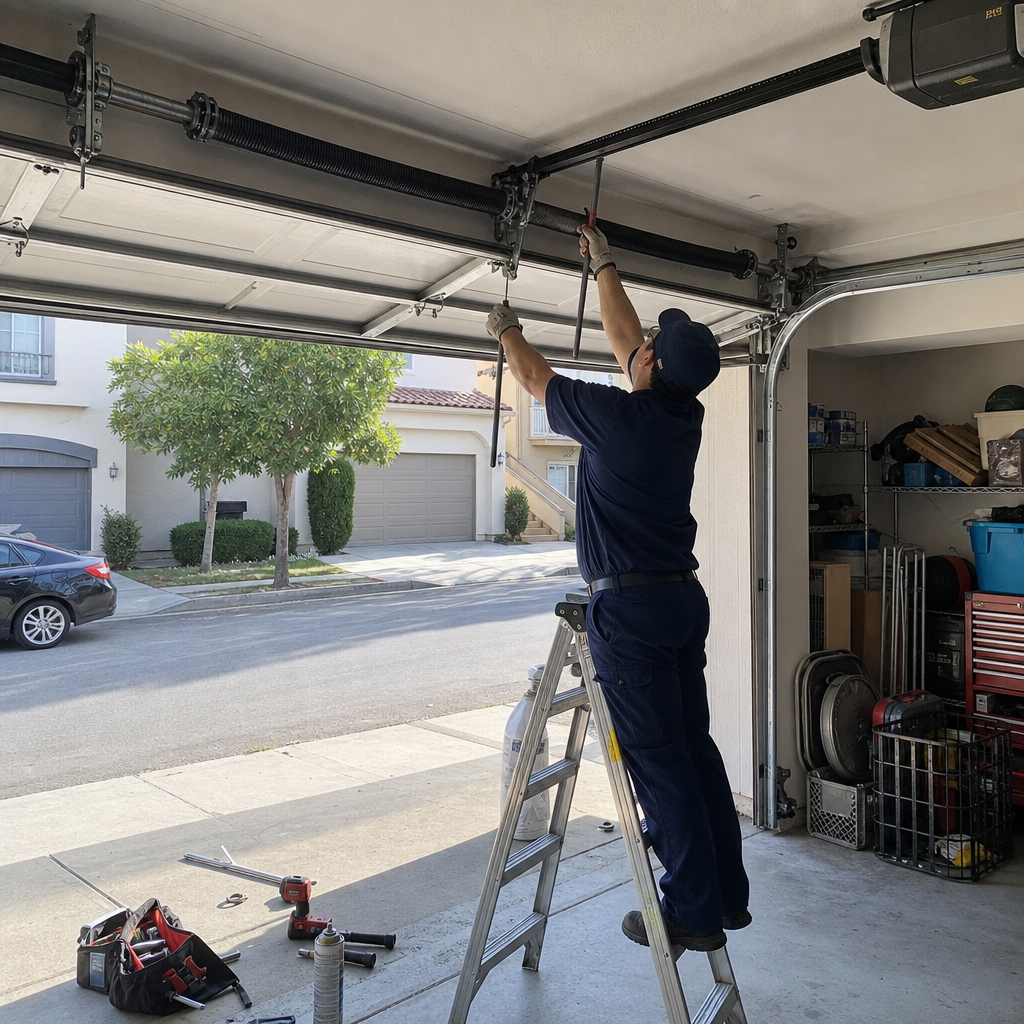
Extension springs run parallel to your horizontal tracks and stretch to counterbalance the door’s weight — they’re common on older San Francisco homes with limited headroom above the opening. These springs are safer to identify than torsion springs but still store significant energy; a broken extension spring often leaves the door crooked in the tracks or impossible to lift manually. We match the spring’s color-coded weight rating to your specific door and install safety cables if they’re missing, which is a common oversight in pre-1990s San Francisco installations.
Cables & Drums
Lift cables wrap around the drums at each end of the torsion tube and transfer the spring’s torque to raise your door evenly — when they fray or snap, the door can drop suddenly or hang at an angle. In hilly San Francisco neighborhoods like Noe Valley and Visitacion Valley, we frequently find cable wear caused by doors that fight gravity on sloped driveways, creating uneven loading. Paul carries multiple cable diameters and drum configurations for everything from standard 8-foot doors to oversized custom units in Victorian-era garages, and he’ll inspect the drum’s groove wear before reusing anything.
Rollers & Hinges
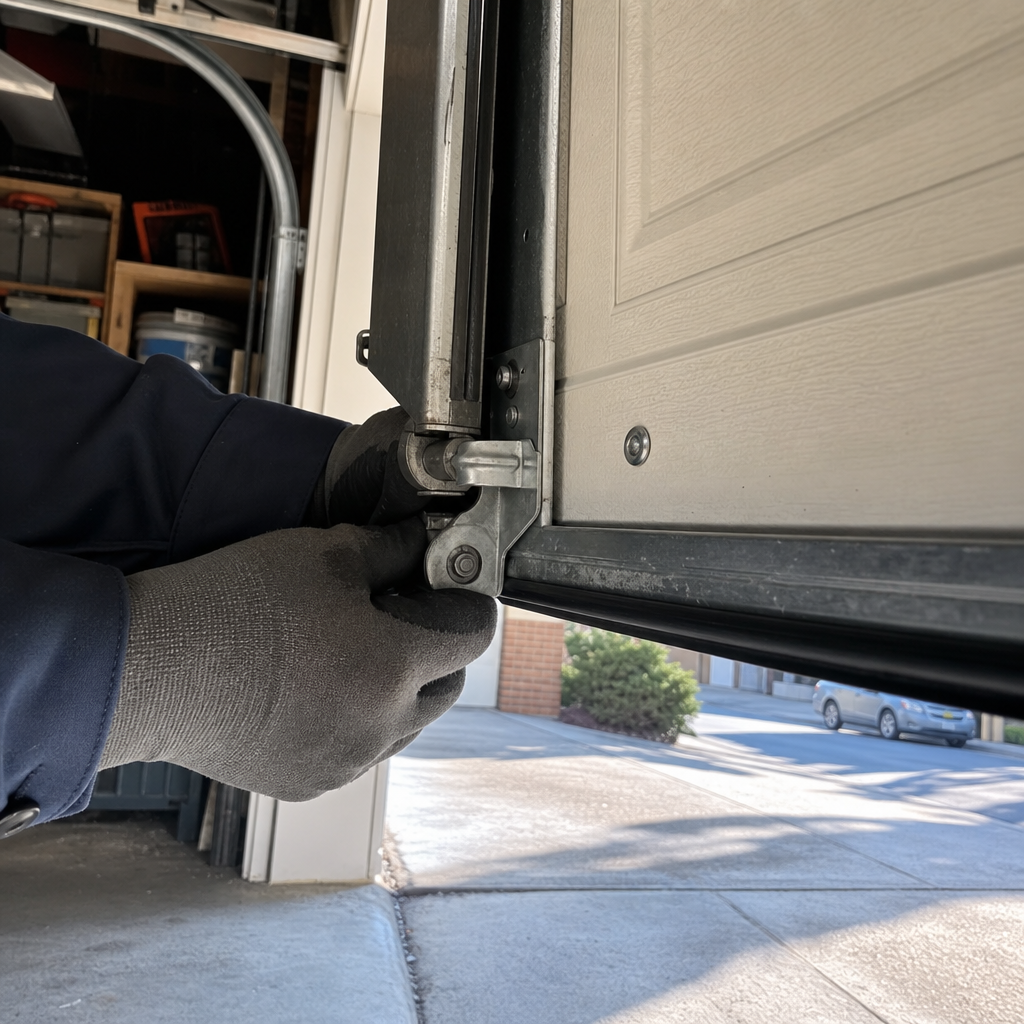
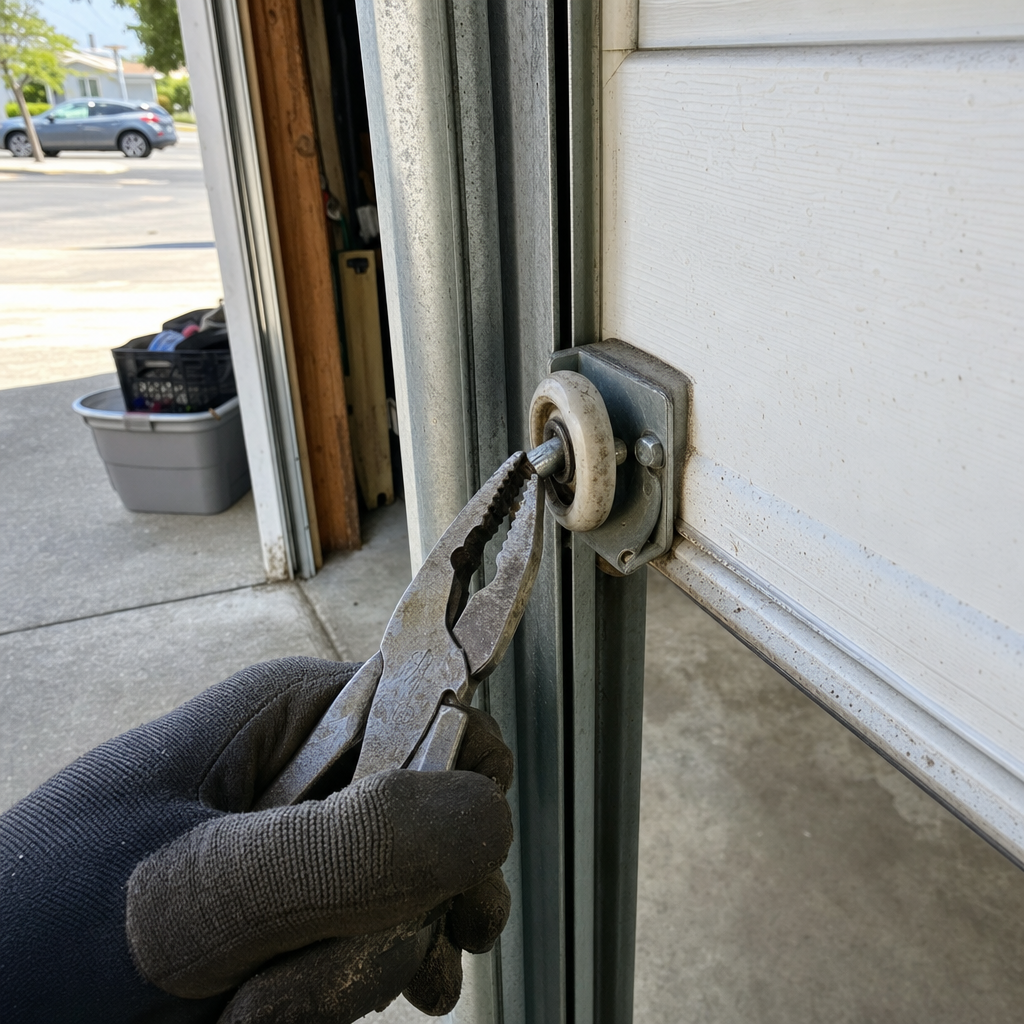
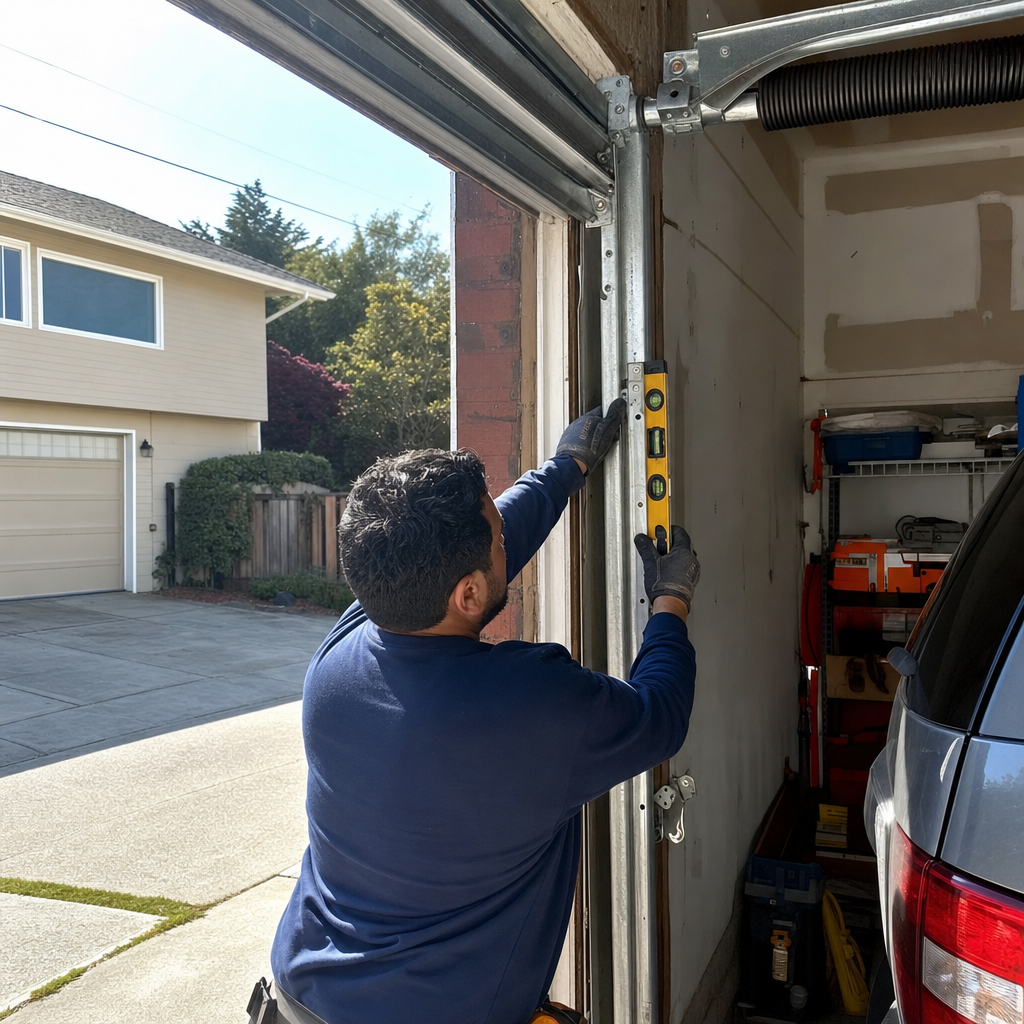
Rollers are the small wheels that ride inside your vertical and horizontal tracks, while hinges connect each panel and allow the door to bend around the radius — together they determine how quietly and smoothly your door operates. After eight years in San Francisco, we’ve learned that Mission District and Chinatown properties with narrow garages often have tight-radius tracks that chew through standard rollers faster than suburban installations. We stock nylon, steel, and sealed-bearing rollers rated for different cycle counts, and we’ll never sell you a premium upgrade unless your actual usage justifies it.
Weatherstripping
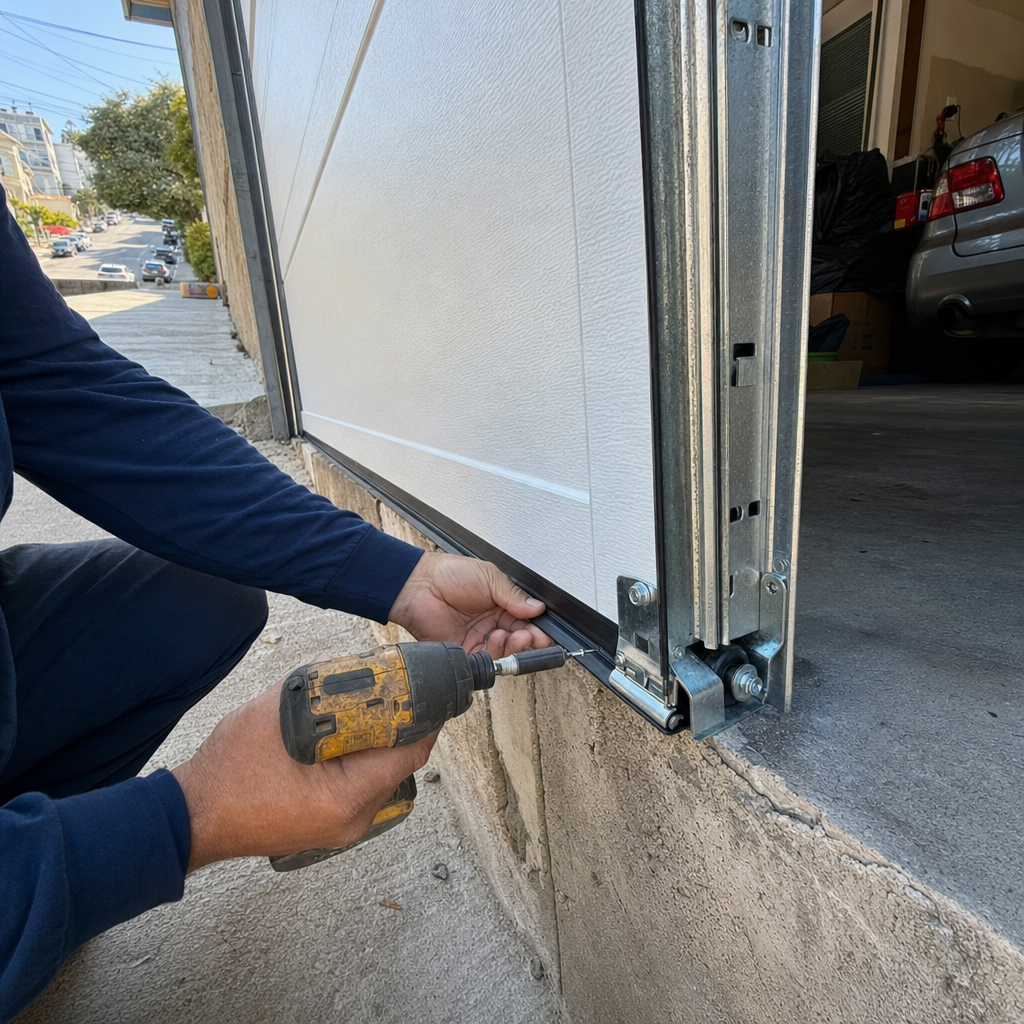
The rubber or vinyl seal along your door’s sides, top, and bottom blocks wind, rain, and the persistent San Francisco fog that seeps into unsealed garages and rusts tools, bikes, and track hardware. We see the worst weatherstripping damage in exposed coastal neighborhoods like the Richmond and Sunset, where UV degradation and salt air combine to crack vinyl within 3–4 years. Paul cuts and fits retainer-style, clip-in, and integrated threshold seals on site — no generic rolls that leave gaps at the corners where water actually enters.
Bottom Seal
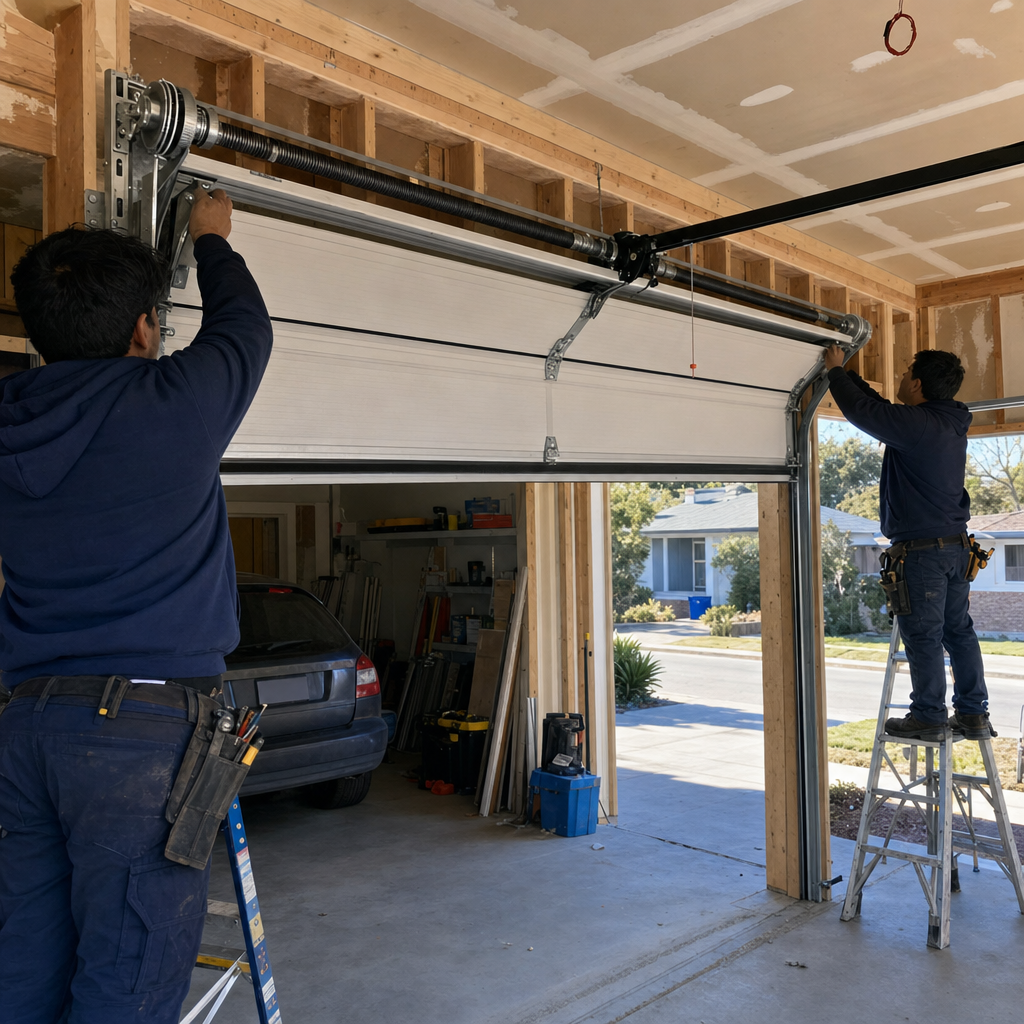
Your bottom seal is the first defense against the water that pools in San Francisco driveways during winter storms and runs downhill toward garage openings. A compromised bottom seal also lets in rodents — we’ve replaced plenty in Visitacion Valley and Daly City properties where rats exploited a 1-inch gap. We carry bulb, bead, and T-style seals to match your existing retainer, and if the retainer itself is bent or rusted, we’ll replace that too rather than forcing a poor fit.
What happens when you call
- 1
A real person answersNo phone trees — you reach a local pro.
- 2
You get an upfront price rangeHonest numbers before anyone is dispatched.
- 3
A background-checked tech heads outLicensed & insured, dispatched right away.
- 4
You approve before work beginsNothing starts until you say go.
Brands We Service for Garage Door Parts
We’ve worked on hundreds of Amarr doors across San Francisco — their Stratford and Oak Summit collections are common in 1990s-era homes from Noe Valley to the Sunset, and we stock their proprietary hinge patterns and bottom seal retainers that big-box stores don’t carry. Wayne Dalton is another frequent find in the city, especially their TorqueMaster spring system which requires specific knowledge to service safely; Paul has rebuilt dozens of these and carries the specialized winding tools they demand. Craftsman openers and door systems appear regularly in Richmond and Sunset District homes, and we maintain compatibility with their evolving part numbers from the Sears era through current production.
Raynor commercial and residential hardware shows up in South San Francisco and Daly City multi-unit buildings where builders specified heavier-duty components — we source their OEM rollers, cables, and operator parts without the extended lead times that property managers dread. Whether you have one of these four brands or any other make installed in your San Francisco garage, Paul can diagnose what’s failing and whether repair or targeted part replacement is the smarter investment. Our home page has more on our full repair and installation capabilities.
Signs You Need Garage Door Parts Right Now
- Loud snapping or popping sounds: A torsion spring breaking sounds like a gunshot — if you hear it from inside your house, don’t try to open the door manually. The remaining spring is now handling double its design load and will fail soon too, potentially damaging the opener or causing the door to fall.
- Door hangs crooked or one side rises faster: This almost always means a failed extension spring, slipped cable, or worn drum — continuing to operate it will twist the door panel and convert a $200 cable job into a $600+ panel replacement. In San Francisco’s tight garages, a crooked door can also scrape your car’s mirror or the garage frame.
- Visible fraying or rust on cables: Garage door cables are aircraft-grade steel, so any visible deterioration means they’ve already lost significant strength. We replace cables in pairs even if only one looks bad, because matched wear means the second failure is typically 2–4 weeks behind the first.
- Roller noise that worsens over weeks: Grinding or squealing that lubrication doesn’t fix indicates flattened roller bearings or cracked wheels — the metal-on-metal contact damages your tracks next. In fog-heavy neighborhoods like the Sunset, moisture accelerates this progression once the nylon or bearing seal is compromised.
- Light visible under the closed door: A failing bottom seal or warped door bottom lets in water, pests, and the cold drafts that make San Francisco garages miserable in summer fog. It also signals that the door isn’t seating squarely, which stresses the opener and side weatherstripping unevenly.
Our Garage Door Parts Process — Step by Step
- 1
Diagnosis over the phone, then in person. When you call (833) 700-7382, Paul asks targeted questions — door type, symptoms, brand if known — so he arrives with the right parts instead of making a second trip. On site, he’ll test balance, inspect cables and springs, and check opener force settings with a calibrated gauge before recommending anything.
- 2
Transparent quote with part numbers. You’ll see exactly what component needs replacement, why the failure occurred, and what the installed price covers — no vague “service fee plus parts” structure. If multiple parts are worn, Paul ranks them by safety urgency so you can phase repairs if budget requires.
- 3
Safe disassembly and replacement. For torsion springs, this means winding bars inserted properly, tension released in controlled quarter-turns, and old springs secured before removal — Paul doesn’t rush this step because a slipping winding bar causes serious injury. Cables are replaced in matched pairs, rollers are installed with correct stem engagement, and every fastener is torqued to manufacturer spec.
- 4
Balance and safety testing. After any spring or cable work, the door must hang neutral at mid-travel and stay put when released — Paul verifies this manually before reconnecting the opener. He also tests the auto-reverse function with a 2×4 block and checks force sensitivity, because new springs change the load profile your opener senses.
- 5
Cleanup and documentation. Old parts are removed from your property, the work area is swept, and you receive a written summary of what was replaced with part numbers and Paul’s direct contact for follow-up questions. We don’t disappear after the invoice is paid.
How Much Does Garage Door Parts Cost in San Francisco?
A typical roller replacement in San Francisco runs $130–$260 depending on whether you need standard nylon or sealed-bearing rollers rated for high-cycle use. Cable repair costs $155–$295, with the upper end covering paired replacement on heavier doors or hard-to-access drum configurations common in older San Francisco garages with limited headroom. Spring work — whether torsion or extension — generally falls in the $210–$400 range, with torsion springs at the higher end due to the specialized tools and safety procedures involved.
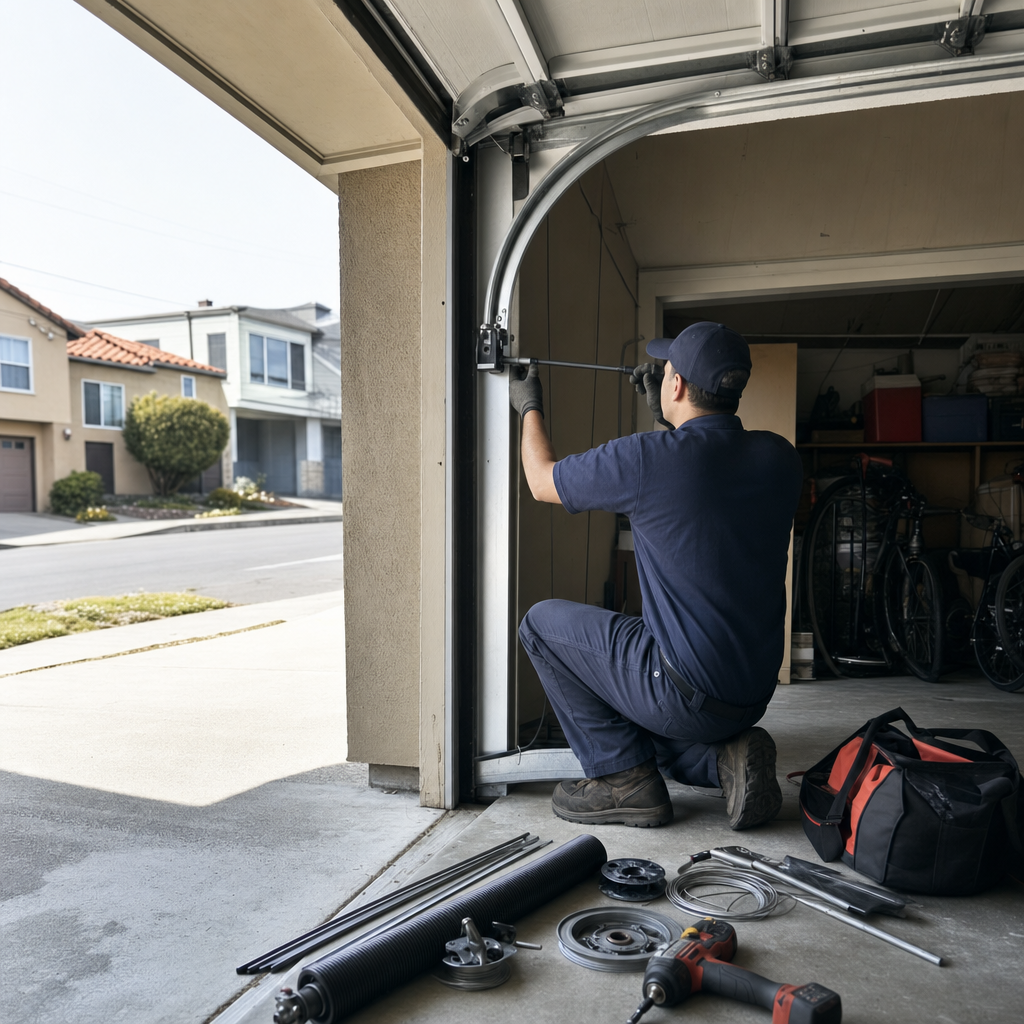
Several factors move you within these ranges: door size and weight (a solid wood Craftsman door in Pacific Heights needs heavier hardware than a steel panel in Daly City), accessibility (tight garages in Chinatown or the Mission District take longer to work in safely), and whether related components show wear that should be addressed simultaneously. The best way to avoid overpaying is getting a written, itemized estimate before work begins — which is exactly what we provide free. Call (833) 700-7382 and Paul will assess your specific door, not apply a flat rate that subsidizes someone else’s complex job.
Garage Door Parts Near San Francisco — Our Service Area
Paul Torres personally covers San Francisco proper plus the immediate Peninsula and southern Marin communities — typically 30–45 minutes to Garage Door Parts in Daly City, 25 minutes to Garage Door Parts in Visitacion Valley, and 20 minutes to Garage Door Parts in Noe Valley depending on traffic. We also regularly service South San Francisco, San Bruno, Millbrae, Burlingame, Pacifica, Sausalito, and the Mission District. If you’re unsure whether your address falls within our route, call (833) 700-7382 — we’ll tell you honestly if another specialist is a better fit for your location.
Serving San Francisco, CA — Our Local Coverage Area
We’re based in the San Francisco area and know this community well. Use the map below to see our service coverage — if you’re nearby, we can almost certainly help.
Frequently Asked Questions — Garage Door Parts in San Francisco
Garage door parts service means diagnosing which specific component has failed — spring, cable, roller, hinge, or seal — and replacing it with the correct OEM or equivalent part rather than replacing the entire door or opener. At Legacy Garage Door Service, Paul Torres arrives with an inventory calibrated to San Francisco’s most common door configurations, so most jobs finish in a single visit without waiting for special orders.
Most single-component replacements take 45–90 minutes from arrival to final testing, with torsion spring work typically at the longer end due to safety procedures. If multiple parts need attention or your San Francisco garage has tight clearances that complicate access, Paul will give you a realistic time estimate before starting — we’ve learned that underpromising and overdelivering earns better reviews than optimistic guesses.
Expect $130–$260 for rollers, $155–$295 for cables, and $210–$400 for springs, with exact pricing depending on your door’s size, weight, and brand-specific hardware requirements. Paul provides free, written estimates with part numbers listed, so you know precisely what you’re paying for — call (833) 700-7382 to schedule yours.
Yes — we’ve replaced Wayne Dalton TorqueMaster springs, cables, and bottom fixtures across San Francisco, and we stock Craftsman-compatible rollers, hinges, and opener hardware for systems from the Sears era through current models. Whatever brand you have, Paul can identify the correct part and source it without the “we’ll call you when it arrives” delay common with dispatch companies.
Emergency service is part of our core offering — when your garage door won’t wait because your car is trapped inside, a spring has snapped, or the door is hanging dangerously, Paul prioritizes same-day response. We’ve handled after-hours calls in Noe Valley, Visitacion Valley, and throughout San Francisco where a broken door created a genuine security or safety issue, not just an inconvenience.
We warranty our labor for one year and pass through the manufacturer’s warranty on parts, which ranges from 3 years on standard rollers to lifetime coverage on certain high-cycle springs. If a part fails prematurely, Paul will determine whether it’s a defect or an underlying issue with door balance or alignment — we don’t blame the customer or the manufacturer without investigating honestly.
Clear vehicles and stored items from beneath the door’s path and ensure Paul has access to electrical outlets and adequate lighting — most San Francisco garages have these, but Victorian-era wiring in neighborhoods like the Mission District can be unpredictable. If you know your door’s brand and approximate age, that accelerates diagnosis, but it’s not required; Paul identifies components visually. Call (833) 700-7382 to book — estimates are free and there’s no obligation to proceed.
Schedule Your Garage Door Parts Service in San Francisco Today
When a spring snaps, a cable frays, or your door starts sounding like it’s grinding gravel, you don’t need a dispatcher — you need Paul Torres to show up personally with the right part and fix it correctly. Legacy Garage Door Service offers free estimates, upfront pricing, and the accountability that comes from an owner who answers your call and does the work. Call (833) 700-7382 now for garage door parts service in San Francisco — we’re available when your door can’t wait.
Written by Paul Torres, Owner at Legacy Garage Door Service, serving San Francisco since 2016.