
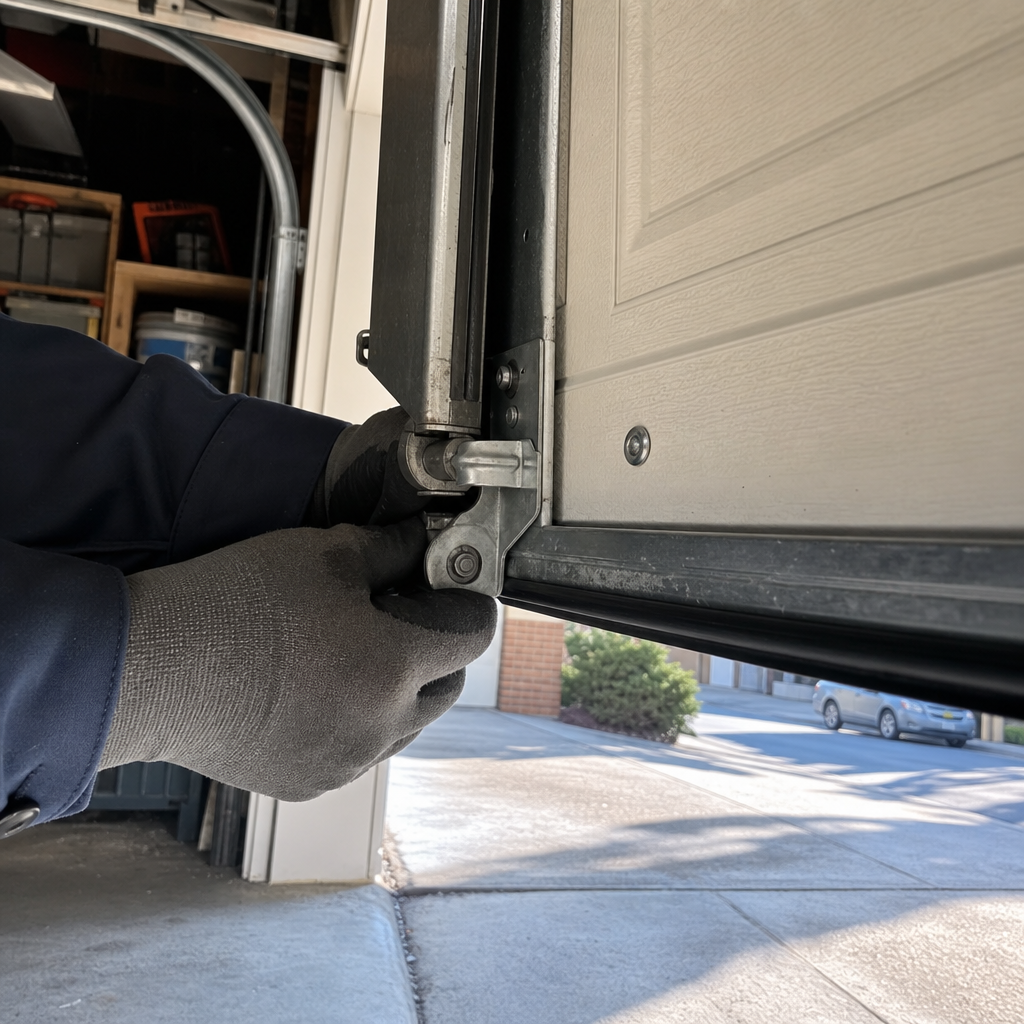
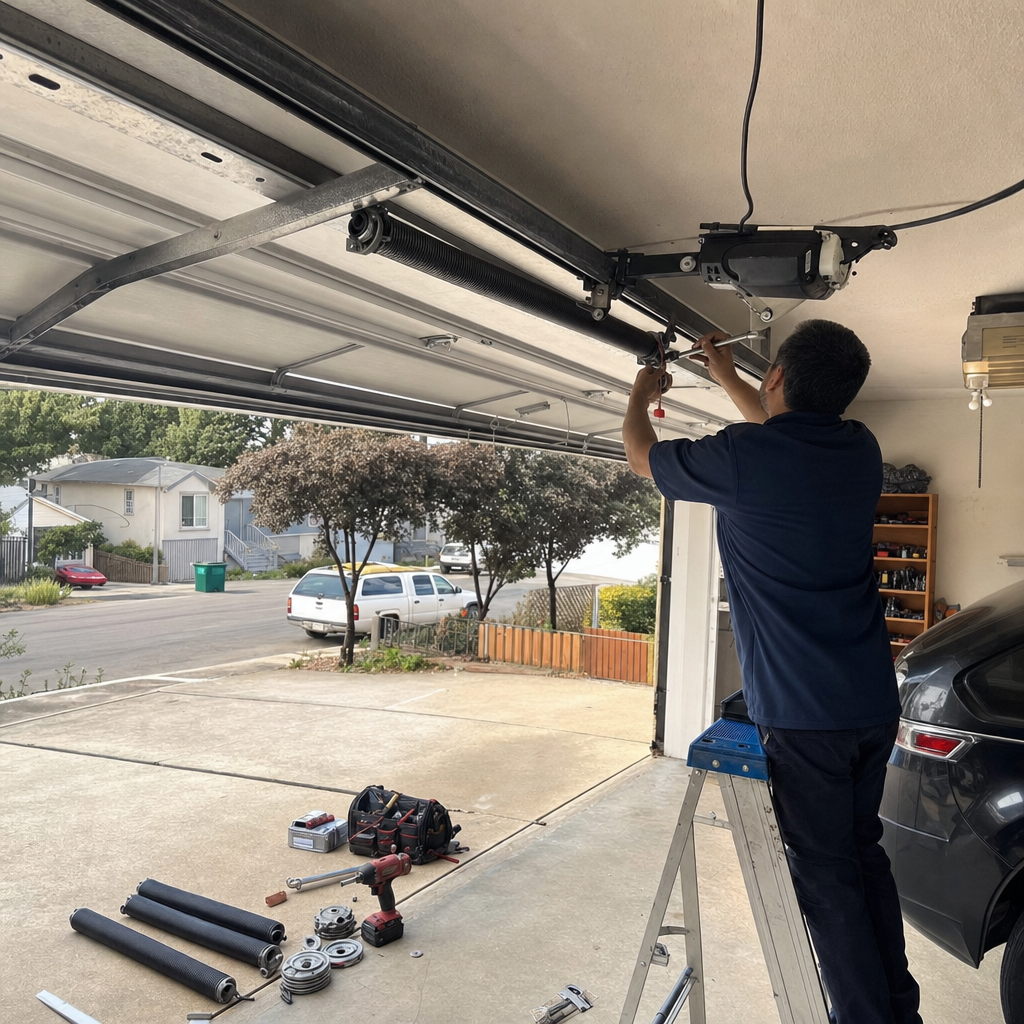
Fast, Reliable Garage Door Parts Across Stanford
Garage door parts replacement in Stanford typically runs $110–$340 depending on the component, and most standard repairs are completed in a single visit after any required approvals are secured. If you’re dealing with a failed torsion spring, corroded cables, or worn rollers on a mid-century faculty home near Palo Verde or Southgate, we’ll walk you through exactly what needs fixing and what it’ll cost before any work starts. Call (833) 700-7382 for a free estimate — Paul shows up personally, and we’ve been making the drive down to Stanford from San Francisco for eight years.
Stanford’s not like other Peninsula towns. The unincorporated status, the university’s oversight of nearly every property, and that persistent marine fog rolling off the Bay create a repair environment you won’t find in Palo Alto or Los Altos Hills. We’ve learned the hard way that pulling a Santa Clara County permit without Stanford Real Estate sign-off can kill a project — even when the job site sits 200 yards from an unregulated Palo Alto address across El Camino Real. That’s why our Garage Door Parts team prepares dual-approval paperwork from day one on any replacement work.
Why Legacy Garage Door Service San Francisco Is Stanford’s Preferred Garage Door Parts Company
Our 935 verified reviews at a 4.7-star rating include dozens from Stanford leaseholders who found us after frustrating experiences with dispatch companies that didn’t understand the university-landlord dynamic. These homeowners aren’t looking for a rotating crew — they want the same technician who diagnosed the problem to return with the right parts and finish the job.
Paul Torres, our owner and lead technician, handles every Stanford call personally. Eight years specializing exclusively in garage doors means he’s seen the exact failure patterns that Stanford’s climate and housing stock produce: rust-pitted torsion springs in homes near El Camino Field, wind-stressed aluminum panels in South of Midtown, and hinge fatigue on original 1960s doors throughout College Terrace. Whatever brand you have — LiftMaster, Chamberlain, Craftsman, Raynor, or others — we stock or source parts without the delay of ordering through a third-party warehouse.
Response time to Stanford averages same-day or next-day for standard repairs, though full door replacements requiring university aesthetic review typically need an additional 5–10 business days for approval. Emergency garage door service is part of our core offering — when your garage door won’t wait, we don’t treat urgency as an upsell.
Our Garage Door Parts Services in Stanford
Torsion Spring Replacement
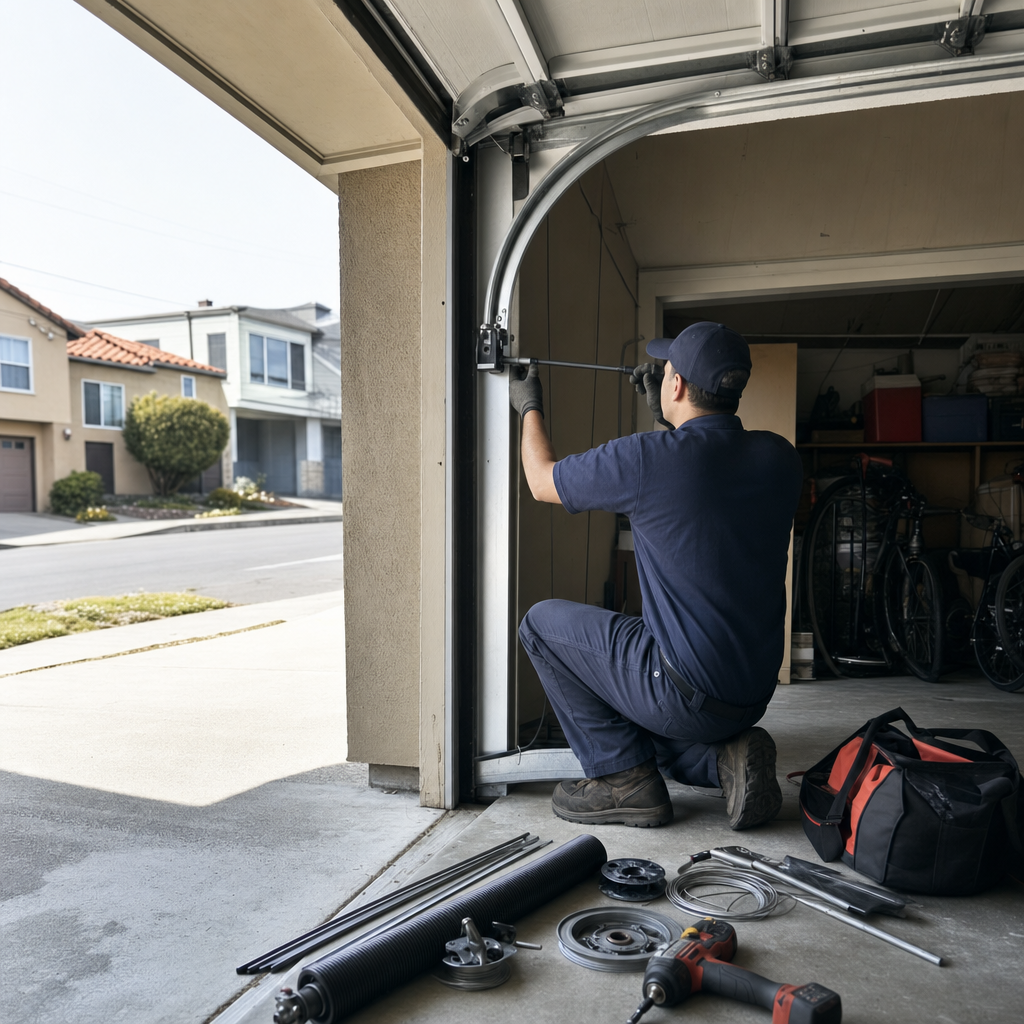
Torsion spring repair in Stanford runs $180–$340 and is our most common call. The marine fog that settles overnight near Oak Grove and the Santa Cruz foothills accelerates corrosion on spring coils far beyond what you’d see in inland San Jose. We replaced a rusted torsion spring and galvanized cables on a mid-century faculty home in College Terrace, where the original 1960s Chamberlain opener had failed. The homeowner needed a LiftMaster whisper-quiet model with smart-home integration, but we had to submit the opener’s finish color and panel profile to Stanford’s Land Use office before installation, adding a week to the timeline. That’s standard here. We always inspect the cable drums and bearing plates when a spring fails — the same moisture that killed the spring usually compromised adjacent hardware.
Extension Spring Systems
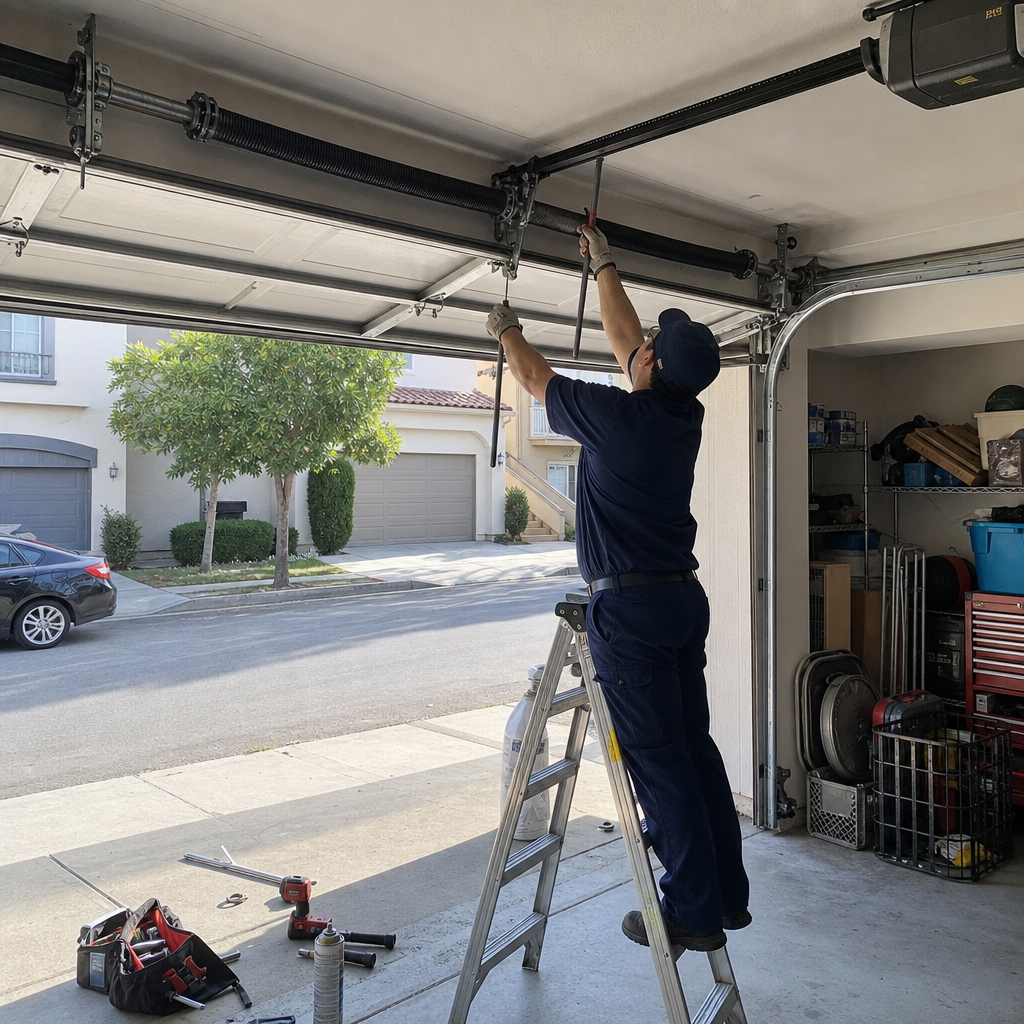
Extension springs appear less frequently in Stanford’s predominant mid-century housing stock, but they’re still found on some older two-car garages in Southgate and detached units near the Dish. Because extension springs operate under full tension when the door is closed, a failed spring can drop the door abruptly — a genuine safety hazard we never recommend homeowners address without proper tools and training. Our replacement protocol includes safety cables, pulley inspection, and door balance verification. In Stanford, we also check for frame rot where the fog collects against wood jambs, since extension spring hardware mounts directly to the track support structure.
Cables & Drums
Cable repair in Stanford costs $130–$250. The cable-drum assembly takes the torque from your spring and translates it into controlled door movement. When cables fray or drums crack — common after years of fog-cycle corrosion — the door can cock sideways in the tracks or slam closed. Stanford’s university leaseholder approval requirements delay cable and roller replacements more than you’d expect, since both county permit and Stanford sign-off are required when the work touches structural mounting points. We document every cable replacement with photos for the approval packet, and we keep galvanized and stainless cable options in stock for the salt-air exposure that standard cables can’t survive here.
Rollers & Hinges
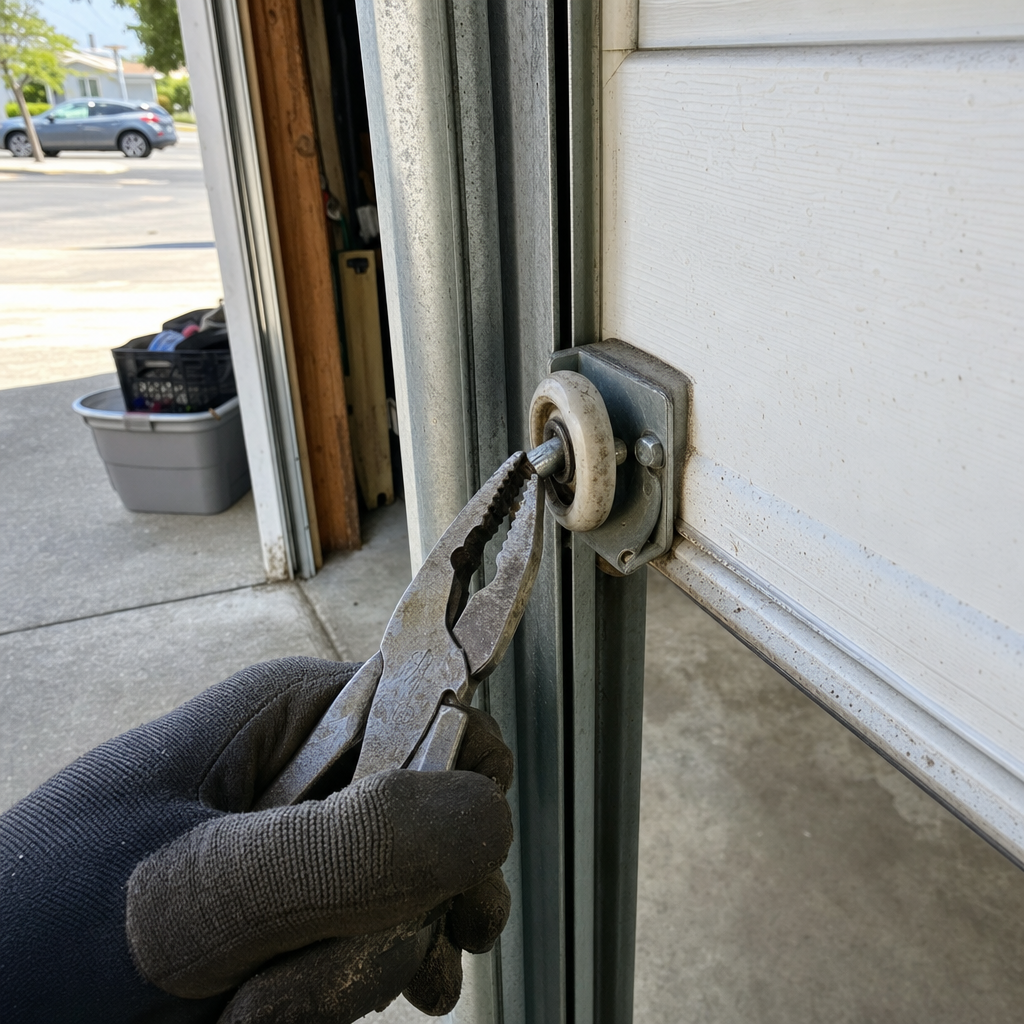
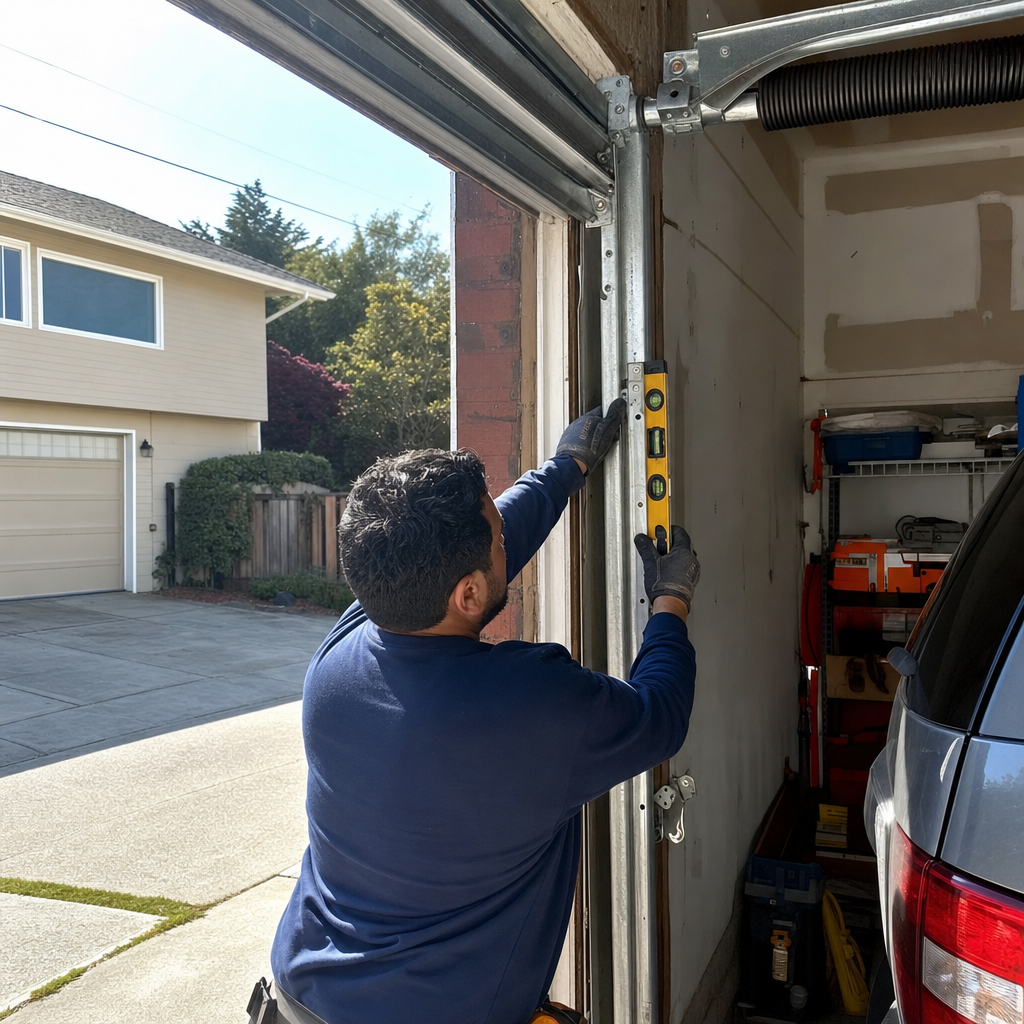
Roller replacement in Stanford runs $110–$220 for a full set. Nylon rollers degrade faster in high-humidity microclimates, and the steel hinges on original mid-century doors often show fatigue cracks from decades of Diablo wind loading. We stock 2-inch and 3-inch stem lengths to match the track geometry of Stanford’s period housing, plus heavy-duty ball-bearing rollers for carriage-house doors where smooth, quiet operation matters. Hinge replacement requires precise gauge matching — too thin and the wind will work the fasteners loose; too thick and the door sections bind. Paul’s measured every major hinge pattern across eight brands, so we don’t guess.
Weatherstripping & Bottom Seal
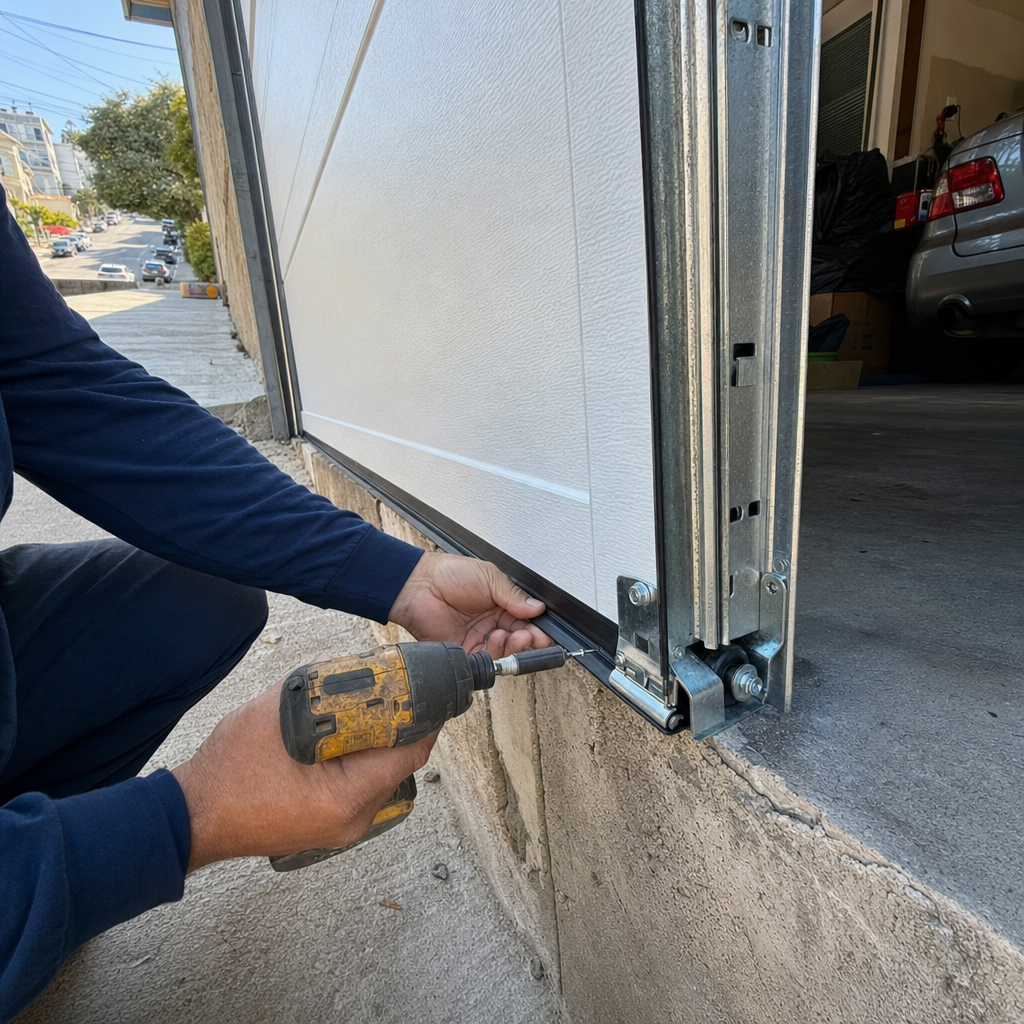
Bottom seal and jamb weatherstripping replacement is often overlooked until water starts pooling on the garage floor. Stanford’s fog-driven moisture problem is more persistent than Palo Alto’s — the elevation differential and foothill drainage patterns trap cool, saturated air against garage doors overnight. We install UV-stable vinyl and EPDM seals rated for marine exposure, with retainer profiles that match Clopay, Amarr, Wayne Dalton, and custom wood door edges.
What happens when you call
- 1
A real person answersNo phone trees — you reach a local pro.
- 2
You get an upfront price rangeHonest numbers before anyone is dispatched.
- 3
A background-checked tech heads outLicensed & insured, dispatched right away.
- 4
You approve before work beginsNothing starts until you say go.
Trusted Brands We Service in Stanford
We maintain parts inventory and supplier relationships for LiftMaster, Chamberlain, Craftsman, and Raynor — four of the eight brands we work on regularly. For Stanford’s smart-home-integrated installations, LiftMaster’s MyQ-compatible openers are the most common request, though we verify that the finish color and panel profile meet university guidelines before ordering. Craftsman and Raynor hardware remains prevalent in 1970s-era faculty housing, and we stock compatible torsion springs, cable drums, and roller brackets for same-day repair on these systems. When a part needs to come from the manufacturer, our eight-year relationship with regional distributors typically cuts delivery to 24–48 hours — faster than most homeowners can source the component themselves.
Common Garage Door Parts Problems We See in Stanford Homes
- Rust-accelerated spring failure. Marine fog from the Bay settles overnight in homes near El Camino Field, corroding spring coils and bottom brackets faster than inland climates. We see 3–4 year lifespans on standard springs where 7–10 years would be normal elsewhere.
- Wind-stressed panel separation. Seasonal Diablo wind events pushing down from the Santa Cruz foothills stress lightweight aluminum panels on older mid-century doors, causing panel separation or hinge failure. The 1950s–1970s housing stock was never rated for this lateral load.
- Approval-delayed repairs. University leaseholder approvals delay replacement of damaged cables or rollers, as both county permit and Stanford sign-off are required. Homeowners sometimes wait weeks for paperwork that would take days in Palo Alto.
- Aesthetic non-compliance on replacements. In Stanford (ZIP 94305), the university’s architectural review standards constrain garage door panel profiles, colors, and materials more strictly than typical residential permitting, so part selection — carriage-house panel design or wood species — must be pre-vetted against aesthetic guidelines. A restriction not present in adjacent Palo Alto.
Pricing for Garage Door Parts in Stanford, CA
Here’s what typical garage door parts work costs in Stanford’s market. These ranges include parts, labor, and standard hardware — not university approval fees or permit costs, which vary by project scope.
| Service | Price Range |
|---|---|
| Torsion Spring Repair | $180–$340 |
| Cable Repair | $130–$250 |
| Roller Replacement | $110–$220 |
What moves the needle within these ranges? Spring wire gauge and cycle rating (10,000-cycle springs cost more upfront, last twice as long), cable material (stainless for fog-exposed homes), and door height (8-foot vs. 10-foot tracks need longer components). We don’t quote over the phone for jobs requiring university approval — the timeline and documentation needs are too variable — but we’ll inspect, photograph, and prepare your approval packet at no charge with any repair commitment. Call (833) 700-7382 for a free estimate.
We Also Serve Cities Near Stanford
We regularly cross El Camino Real for jobs in Palo Alto, where permitting runs through city hall rather than dual county-university channels. Atherton and Los Altos Hills bring their own architectural review boards, while East Palo Alto shares Stanford’s fog exposure without the leaseholder complications. The same technician — Paul — handles calls across all five cities, so your diagnostic notes travel with the job.
Serving Stanford, CA — Our Local Coverage Area
We’re based in the Stanford area and know this community well. Use the map below to see our service coverage — if you’re nearby, we can almost certainly help.
FAQs — Garage Door Parts in Stanford
Standard torsion spring replacement on an existing door typically does not require university approval if you’re not altering the door panel, opener, or mounting structure. However, if the spring failure damaged the header, jamb, or track support — common with rust-compromised hardware in fog-exposed homes — the repair may trigger review. We photograph and document every Stanford job to clarify whether your specific repair falls inside or outside approval requirements. Call (833) 700-7382 and we’ll walk through your situation before scheduling.
Stanford doesn’t designate formal “historic districts,” but the university’s architectural review standards apply community-wide and restrict opener finish color, panel profile, and visible hardware style. Belt-drive and wall-mount openers are generally acceptable if their housing color matches approved palettes; chain-drive units are functionally allowed but rarely selected for noise reasons in dense faculty housing. We submit opener specifications to Stanford’s Land Use & Environmental Planning office as standard practice on replacement jobs. The process adds roughly one week.
Stanford sits lower in the drainage basin at the base of the Santa Cruz foothills, where morning marine fog settles and persists longer than in Palo Alto’s slightly elevated, better-ventilated terrain. This extra fog exposure — particularly in Palo Verde and near El Camino Field — keeps cable surfaces damp through mid-morning, accelerating galvanic corrosion at the bottom bracket where road salt and organic debris collect. We spec stainless or heavily galvanized cables for Stanford homes as standard. Call (833) 700-7382 for an inspection if your cables show surface rust.
No — not without Stanford Real Estate approval. As a leaseholder, you don’t hold final authority over material changes, and the university’s aesthetic guidelines specify approved wood species, grain patterns, and finish colors for visible exterior components. We’ve seen homeowners purchase custom cedar or mahogany panels only to have installation blocked at final inspection. We pre-vet all wood panel selections against Stanford’s guidelines before ordering. The approval process takes 5–10 business days but prevents far costlier mistakes.
Diablo wind gusts — dry, high-velocity downslope winds from the Santa Cruz foothills — create lateral pressure that standard overhead door hardware wasn’t designed to resist. Lightweight aluminum panels on 1960s–1970s doors flex in the wind, working hinges loose and eventually cracking panel sections at the stile joints. We reinforce wind-exposed doors with heavier-gauge hinges, additional struts, or panel replacement with wind-load-rated sections where the structure allows. Homes in South of Midtown and along the foothill edge see this most acutely.
Written by Paul Torres, Owner at Legacy Garage Door Service San Francisco, serving Stanford since 2016.